Yes, a belt is the fastest way to transform a dress, provided the width suits the fabric and the placement matches the shape you’re after. Match a thin belt to delicate cloth, a medium leather belt to almost anything else, and put it where you want the eye to land. The collection includes dresses designed to be worn with belts, such as belted midis and simple slips that work well with a sash.
TL;DR:
- Matching the belt width and material to the dress fabric is crucial, with thin belts suited for delicate fabrics and wider belts for structured or flowy styles.
- Placing belts at the natural waist flatters most body shapes, while higher or lower positions can alter proportions and suit specific dress cuts.
- Using the correct fastening technique, such as looping excess under the strap, ensures the belt looks intentional and well-styled.
- Tone-on-tone belts are understated and versatile for patterned or busy dresses, whereas contrasting belts highlight the waist as a focal point.
- For formal occasions, opt for minimal hardware and sleek designs, while casual settings allow textured and woven belts for more relaxed looks.
Table of Contents
- Which belt suits your dress silhouette?
- How do you fasten a belt so it looks intentional?
- Where should a belt sit on your waist?
- What fabric and material actually works?
- How do you choose a belt colour for your dress?
- How formal should your belt be?
- How do you match belt hardware with your other accessories?
- Why belts deserve more space in your wardrobe
- Where to find belted dresses and belts that work
- Sources
- FAQ
Which belt suits your dress silhouette?
Every dress shape has a belt that flatters it and one that fights it. A slip dress in liquid satin wants something soft and slim; a stiff cotton shirt dress can carry a proper leather strap with a metal buckle. Getting this pairing wrong is the single biggest reason a belt ends up looking bolted on rather than styled in.
The table below gives a fast starting point. Treat it as a first move, not a rulebook.
| Dress silhouette | Best belt type | Why it works | Buying tip |
|---|---|---|---|
| Slip dress | Slim (1–2cm) leather or satin sash | Delicate fabric needs a light hand; a wide belt overwhelms the drape | Choose suede-backed for slippery fabrics to stop it sliding |
| Fit-and-flare | Medium (3–4cm) leather belt | Defines the waist right where the skirt flares | Look for a curved, shaped belt rather than a flat strap |
| Shirt dress | Medium to wide leather with a classic buckle | The structured collar and placket can handle more hardware | Match buckle finish to your usual jewellery metal |
| Maxi or boho | Wide braided or corset-style belt | Long, flowing fabric needs a strong horizontal line to break it up | Braided or woven styles read more relaxed than smooth leather |
| Sweater dress | Elastic or soft leather belt | Knit fabric needs give; a rigid belt will crease and dig in | Elastic belts sit flatter under bulky wool |
| Bodycon | Slim metallic or chain belt | The shape is already fitted, so the belt is decoration, not structure | Choose one with a secure clasp, not just a slide buckle |
| Oversized shift | Wide belt, sometimes cinched high | Creates a waist that the cut deliberately hides | Avoid a wide corset belt if you’re short in the torso, it can swamp the frame |
Notice the pattern: soft fabrics get soft belts, structured fabrics get structured ones. A tonal belt (same family of colour as the dress) reads as quiet definition. A contrasting belt, black on cream, tan on navy, reads as a deliberate design choice, and stylist guides treat medium-width leather in the 3 to 4cm range as the safest all-rounder for exactly this reason.
How do you fasten a belt so it looks intentional?
A belt that looks accidental usually comes down to fastening, not fabric. These steps fix the most common giveaways.
- Thread and pull flush. Feed the belt through the loops or waistband, buckle it at your chosen tension, then smooth any twist out of the strap before you move on.
- Loop the tail, don’t let it hang. Slide the excess length back under the main strap and let it sit flat against your hip. Stylists call this the tail-loop trick, and it’s what separates a styled belt from a strap that’s simply too long.
- For a sash or soft leather, skip the buckle entirely. Wrap once round the waist, cross the ends, and tie a single flat knot to the side rather than centre front, it sits better under a jacket and avoids bulk.
- For oversized dresses, blouson the fabric by pulling a little extra material up and over the belt once it’s fastened. Run the two-finger test: you should be able to slide two fingers under the belt comfortably. Tighter than that and you’ll get a hard line by lunchtime.
Pro Tip: If a belt keeps sliding on satin or silk, a strip of fashion tape on the inside of the strap, or a suede-backed belt in the first place, solves it without a single stitch.
If a belt bunches the fabric underneath, you’ve pulled too much through before fastening. Loosen, smooth the dress flat, then re-tighten.
Where should a belt sit on your waist?
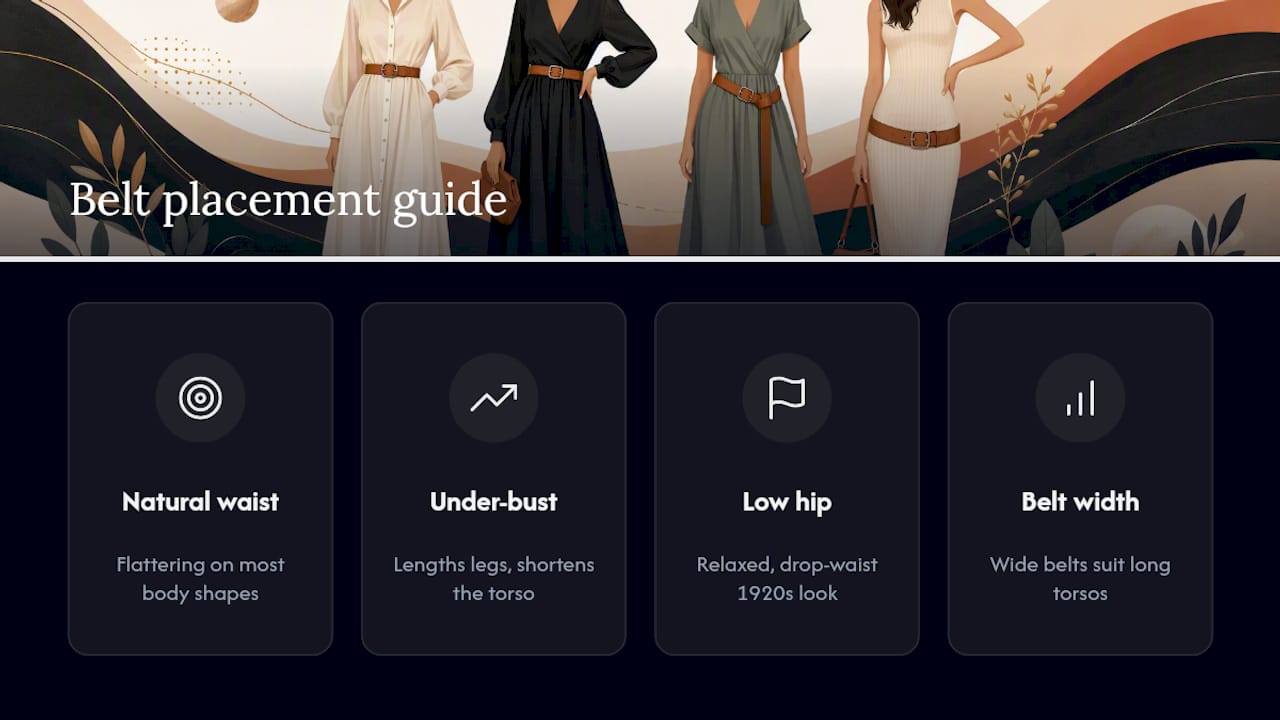
Most bodies are flattered by the belt sitting at the natural waist, the narrowest point between ribs and hips, because that’s where the body already curves in. It’s the default for a reason: it works on the widest range of shapes without any extra thought.
Move the belt higher, just under the bust, and the effect changes entirely. That placement visually lengthens the legs by shortening the appearance of the torso, and it’s particularly flattering on apple-shaped bodies where a natural-waist belt can feel tight across the middle. Cedar & Lily’s styling guide makes this the core rule for adjusting proportion with placement alone rather than a different dress.
Low placement, sitting on the hips rather than the waist, belongs to drop-waist dresses and suits a longer torso or someone who wants a more relaxed, 1920s-inspired line.
Width matters just as much as height. A wide corset belt on a short torso can eat up all the space between bust and hip, leaving no visual breathing room. On a longer torso, that same wide belt has room to sit properly and creates real structure. Two women in the same dress can need entirely different belts.
What fabric and material actually works?
Match the belt’s texture to the dress fabric, not just its colour. Silk and satin want something equally refined: a thin metallic belt or a soft velvet strap sits well without fighting the drape. Chunky leather on delicate silk usually looks like a mismatch rather than a contrast.
Knitwear pairs best with smooth leather or an elastic belt, both move with the fabric instead of creasing it. Cotton and linen suit woven or canvas belts, casual textures for casual cloth. Denim dresses can take braided leather or suede without looking overdone.
Tonal belts (matching the dress’s colour family) read as quiet and polished. Contrasting belts add drama and work best on simpler dress shapes. For comfort, especially if you’ll be sitting for hours, an elastic or lightly padded belt beats a rigid one, and suede backing on any belt cuts down on slipping.
How do you choose a belt colour for your dress?
The safest starting point is tonal: a belt in the same colour family as your dress, camel on cream, black on charcoal, creates definition without introducing a new focal point. This works particularly well on printed or patterned dresses, where a busy fabric doesn’t need competition from a bold belt too.
Contrast is the bolder option, and it’s had a real moment again with oversized belts and statement buckles reappearing over dresses and blazers in recent seasons. A tan belt over a navy dress, or a red belt over black, turns the waist into the outfit’s main event rather than a supporting detail.
For patterned dresses, pull one colour out of the print and match the belt to that, it looks coordinated rather than clashing. A floral dress with green leaves and pink flowers, for instance, works with either a soft green or dusty pink belt, but rarely both competing at once.
Neutral belts, black, tan, brown, or cream, are the versatile default because they work across your whole wardrobe rather than one dress. If you only own one belt, buy it in a neutral tone before chasing a trend colour. Bright or metallic belts are worth owning as a second or third purchase, once the neutral is doing the daily heavy lifting.
One rule holds regardless of colour choice: a belt that’s a near-exact match to the dress fabric’s undertone will look intentional, while one slightly off will look like a mistake rather than a decision. If you’re unsure, hold the belt against the dress in daylight before committing.
How formal should your belt be?
Occasion changes the calculus more than any other factor. A casual daytime dress can carry a woven or braided belt with visible texture, the kind of thing that would look wrong at a desk. Office dressing calls for the opposite: a clean leather belt, medium width, minimal hardware, in black, tan, or a neutral that matches your shoes or bag.
Evening dressing is where belts get to be jewellery. A slim metallic or chain belt over a slip or bodycon dress does the work a necklace might otherwise do, and it photographs well under low light in a way a plain leather strap won’t. Save the wide statement belts for daytime or weekend looks, they can read as too casual against formal evening fabric.
Weddings and smart-casual events sit in the middle. A shirt dress with a structured medium belt works for a daytime wedding guest look, while a maxi dress with a wide braided belt suits a summer garden party better than an office boardroom. The general principle: the more formal the occasion, the simpler and more restrained the belt should be. Save the texture and drama for daytime.
How do you match belt hardware with your other accessories?
Buckles and embellishments are jewellery, so treat them like it. A gold buckle reads oddly next to silver earrings and a silver watch, not because it’s wrong exactly, but because it breaks the metal story your outfit was already telling. Pick one metal tone, gold, silver, or rose gold, and carry it through belt, jewellery, and any visible bag hardware.
Shoes matter almost as much. A belt with a large, ornate buckle pairs naturally with a statement heel or an embellished sandal, both are saying the same thing: this is a considered, dressed-up look. A plain leather belt with a small buckle suits flat sandals or simple trainers better, understated accessories that don’t compete for attention.
Bags are the third leg of this triangle. If your belt has visible stitching or a distinctive texture, like woven raffia or braided leather, echoing that texture somewhere in your bag ties the whole outfit together without matching everything exactly. It doesn’t need to be the same brand or even the same material family, just the same mood.
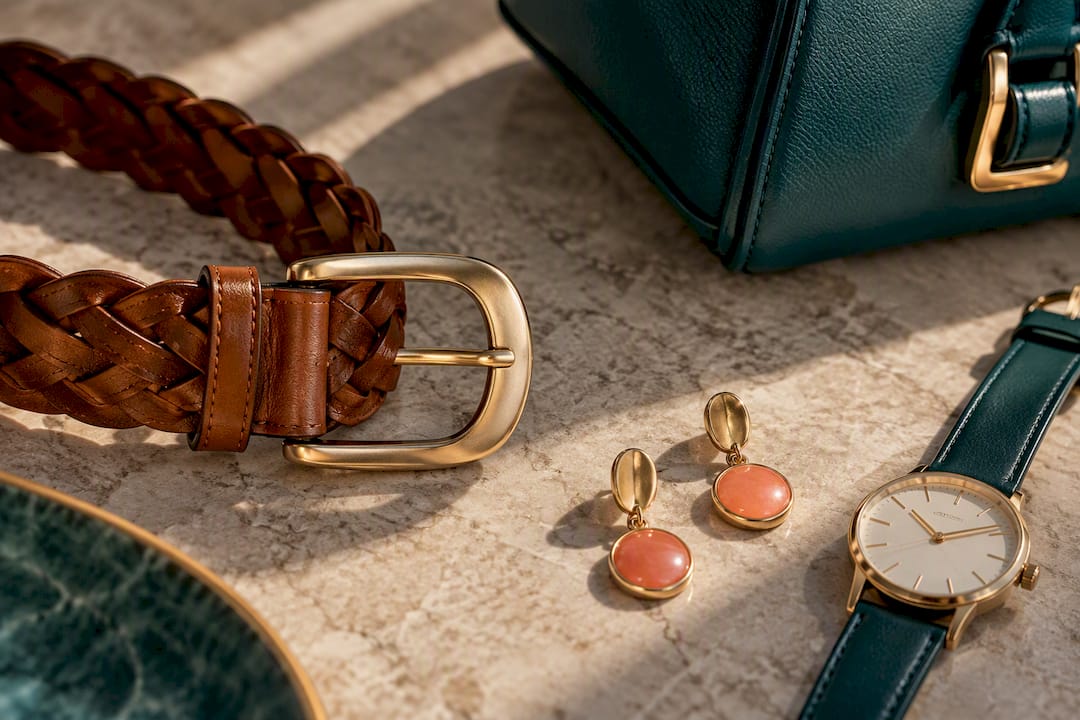
The easiest failure to avoid: one loud, ornate piece competing with another. If the belt buckle is the statement, let the shoes and bag be quieter. If the shoes are the statement, a simple belt lets them do their job.
Why belts deserve more space in your wardrobe
A handful of belts multiplies what a dress collection can do more cheaply than buying new pieces. Change the belt and you change the outfit, the occasion, even the decade it evokes. The catalogue offers dresses designed to work well with belts, alongside accessories to match, supported by straightforward returns and shipping policies that facilitate trying combinations.
— Mykola
Where to find belted dresses and belts that work
If you want the shortcut, JV London’s belted midi dress with wide sleeves comes with the proportion decision already made for you, a medium-width belt set at the natural waist, no guesswork required.
For readers building this out themselves, start with a versatile piece like the V-neck mini dress, which takes a slim belt for evening or a woven one for daytime without any alteration. Pair it with a bag like the top handle bag with bamboo detail if you want the hardware story to carry through, wood tones and warm metals sit nicely against tan or camel leather belts.
A few practical notes before you buy: check the belt width listed in the product description against the fabric weight of your dress, and if you’re choosing for a satin or silky piece, look for suede backing to stop it riding up during the day. Free shipping is available within the UK; a 30-day return policy is offered if a width or colour doesn’t work once it arrives, and multi-buy discounts are sometimes available to encourage purchasing additional belts.
Sources
- Remember Belts Over Dresses? The 2000s Styling Trick Is Making A Comeback | Times Now
- How to wear a belt with a dress: 7 expert tips for a flattering look - Fashion Valet
- How to belt a blazer (and by extension dresses): stylist techniques and examples — POPSUGAR
FAQ
Is it fashionable to wear a belt with a dress?
Yes, belting a dress is a genuinely fashionable move rather than a dated habit, and current runway and street style coverage shows oversized belts and bold buckles reappearing over dresses and blazers. The key is matching the belt’s width and finish to the dress fabric so it looks chosen rather than random.
Are belts on dresses in style in 2026?
Belts remain a strong seasonal accessory, with waist-cinching silhouettes and statement buckles continuing to feature heavily in fashion coverage. Medium-width leather belts stay the most versatile choice across trend cycles because they suit the widest range of dress styles.
Does a belt on a dress make you look slimmer?
A belt doesn’t change your size, but it can visually redefine your waist and improve proportion, especially when placed at the natural waist or raised slightly higher under the bust. Stylists note that higher placement lengthens the appearance of the legs, which reads as a slimmer overall silhouette even without changing the dress itself.
How do you put a belt on a dress?
Thread the belt through any waist loops or simply wrap it round the dress, fasten it at a comfortable tension, then loop the excess tail under the main strap so it lies flat instead of hanging loose. For soft fabrics like satin, a suede-backed belt or a strip of fashion tape underneath keeps it from sliding out of place during the day.