Start with a sweaterdress in a wool blend, then build out from there: a long-sleeve midi for the office, a lined velvet dress for parties, and a turtleneck dress for the days you want warmth without a single extra layer. Between them, these four styles cover almost everything winter throws at your wardrobe. Buy the sweaterdress first. Everything else can follow once you see how hard it works.
TL;DR:
- Wool or wool-blend sweaterdresses are the most versatile first purchase for winter, providing warmth and layering options through the season.
- Long-sleeve midi dresses in ponte or thick jersey are essential for work and evening, offering a smart silhouette with warm fabric.
- Velvet and party dresses should have full linings and long sleeves to ensure warmth and suitability for indoor and outdoor settings.
- Proper layering involves a fitted thermal base, thick tights, and a coat that fits well, with footwear chosen for warmth and grip.
- Merino wool blends, boiled wool, and cashmere options offer the best warmth-to-weight ratio, while full linings significantly improve heat retention and drape.
Table of Contents
- What are the best winter dresses for women this season?
- How do you layer a winter dress for warmth without losing the shape?
- Which fabrics keep you warm without adding bulk?
- What should you check before buying a winter dress online?
- Why trust this winter dress edit?
- What are the sustainable and eco-friendly winter dress options?
- Where can you find affordable winter dress brands?
- How do you care for winter dresses to keep them warm and looking good?
- Shop the winter dresses we’d actually recommend
- A closing thought on dressing for winter
- Sources
- FAQ
What are the best winter dresses for women this season?
Winter dressing isn’t about owning more. It’s about owning the right four or five pieces that actually earn their place, which is exactly the thinking behind a good capsule wardrobe. Editors keep circling back to the same shortlist of shapes because they solve real problems: warmth, layering ease, and enough personality to carry you from a Tuesday commute to a Friday party.
The sweaterdress is the one to buy first. Knitted, close but not clingy, and long enough to sit at the knee or below, it works alone on a mild day and layers under a coat when the temperature drops. Fashion editors have called it the hardest-working piece in a winter wardrobe for good reason. Look for wool or wool-blend yarns with a bit of structure so it doesn’t sag by January.
Long-sleeve midi and maxi dresses do the heavy lifting for work and evening. A fitted long-sleeve midi in ponte or a heavier jersey reads smart with boots and a blazer, then dresses up with heels and statement earrings after 6pm. This is the shape Marie Claire UK points to as a genuine winter essential, precisely because the long sleeves and warmer fabrication make it wearable without a cardigan underneath.
Velvet and party dresses need a closer look before you buy. Check the lining runs the full length and check the sleeves, since a sleeveless velvet dress in December means you’re reaching for a coat you can’t take off indoors. A long-sleeve velvet dress in a jewel tone solves both problems and still photographs beautifully under party lighting.
Turtleneck and high-neck dresses trap warmth at the point you lose the most heat, your neck, so they’re worth having even if the silhouette isn’t your usual choice. A slim-fit turtleneck dress in a fine-gauge knit looks pulled-together with almost no accessories.
Plaid, shirt dresses, and jersey knits round out the casual end. They layer well over thermals, take a chunky belt easily, and don’t feel precious if you’re wearing them to the school run.
A quick guide to pairing:
- Sweaterdress → knee boots, wool tights, a longline coat
- Long-sleeve midi → ankle boots, tailored coat, structured bag
- Velvet party dress → heeled boots or courts, statement earrings, a faux-fur or wool coat
- Turtleneck dress → over-the-knee boots, a wide belt, minimal jewellery
Editors also favour a mix of neutrals with one statement texture or colour, so plan your four or five dresses with that balance in mind rather than buying five versions of the same safe black knit.
How do you layer a winter dress for warmth without losing the shape?
Layering is a sequence, not a pile-on. Get the order wrong and you end up bulky in the wrong places and still cold at the ankles.
- Base layer first. A thin, high-quality thermal in silk or fine-gauge merino goes directly against skin, giving warmth without adding visible bulk under a fitted dress.
- The dress itself. This is your main insulating and styling layer, so fit it to allow a little room for what’s underneath.
- Tights, chosen by denier. Go for 80 denier or above for genuine cold, and pick seamless or shaped styles so nothing bunches at the waistband. Fleece-lined tights are worth the extra cost for anything below freezing.
- Outerwear last. A coat that closes properly beats a stylish one that gapes at the chest.
Footwear follows a simple rule: knee-high or over-the-knee boots for midi and maxi lengths, ankle boots for anything shorter, and always check the sole for grip before an icy commute. Styling guides consistently pair opaque tights with knee-high boots to solve warmth and proportion in one move. A wool scarf, a structured belt at the waist, and a beanie or beret finish the look and add real warmth, not just decoration.
Pro Tip: Keep your base layer close fitting and match your boot colour to your dress tone. It visually lengthens the leg line and stops a bulky silhouette forming under the coat.
Three formulas to try: a sweaterdress with knee boots and a wool coat for the commute, a midi shirt dress with ankle boots and a denim jacket for weekend brunch, and a velvet turtleneck dress with over-the-knee boots and drop earrings for evening.
Which fabrics keep you warm without adding bulk?
Merino wool blends offer the best warmth-to-weight ratio of any common dress fabric, which is why a thin merino dress can feel warmer than a thick acrylic one. Hand wash or use a wool cycle, and dry flat to stop stretching.
Boiled wool and cashmere blends cost more, but the density of the weave traps air more effectively, so they’re worth it for a dress you’ll wear weekly through winter rather than once.
- Linings matter more than most shoppers realise. A full lining improves both drape and heat retention, and it’s worth checking the hem and armhole finish before you buy, since a poorly sewn lining tugs and lets cold in.
- Jersey and blended fabrics give you stretch and everyday comfort, ideal for dresses you’ll wear under a coat all day.
- Pilling prevention comes down to washing inside out, avoiding high heat, and using a fabric shaver every few weeks rather than waiting until it’s visible.
Fashion editors increasingly advise prioritising knit quality and linings over decorative trims when comparing two similarly priced dresses, since those two features determine how warm and how long a dress actually lasts.
What should you check before buying a winter dress online?
Buying blind online means a handful of checks save you a return trip to the postbox.
- Size up slightly if you plan to wear thermals underneath, particularly with fitted knit styles.
- Match the length to your boots. A midi needs knee-high boots to avoid a gap of bare leg; a maxi needs to clear the floor when you’re wearing heels.
- Spend on knit quality and lining, save on trims. A well-knitted, fully lined dress in a plain colour outlasts a heavily embellished one in a thin fabric.
- Read the fabric composition properly, not just the marketing description, and check product photography from multiple angles.
- Confirm delivery times and the return window before you commit, especially for party dresses bought close to an event date. Stock listings from major retailers show wool-blend midis and lined velvet dresses are widely available this season, so there’s rarely a need to compromise on fit to get the fabric right.
Why trust this winter dress edit?
This guide comes from Jvwear, the online shop behind JV London, which curates dresses, knitwear, and accessories for women who want versatile, everyday-wearable pieces rather than throwaway fast fashion. The recommendations here draw on established editorial thinking around winter dressing, including JV London’s own work capsule wardrobe advice, rather than a single vendor’s product line.
To be upfront: this is an editorial edit, not a side-by-side vendor comparison. Written by Mykola, it’s built to help you buy fewer, better dresses this winter, and it includes honest links to specific JV London pieces where they genuinely match the styles recommended above.
What are the sustainable and eco-friendly winter dress options?
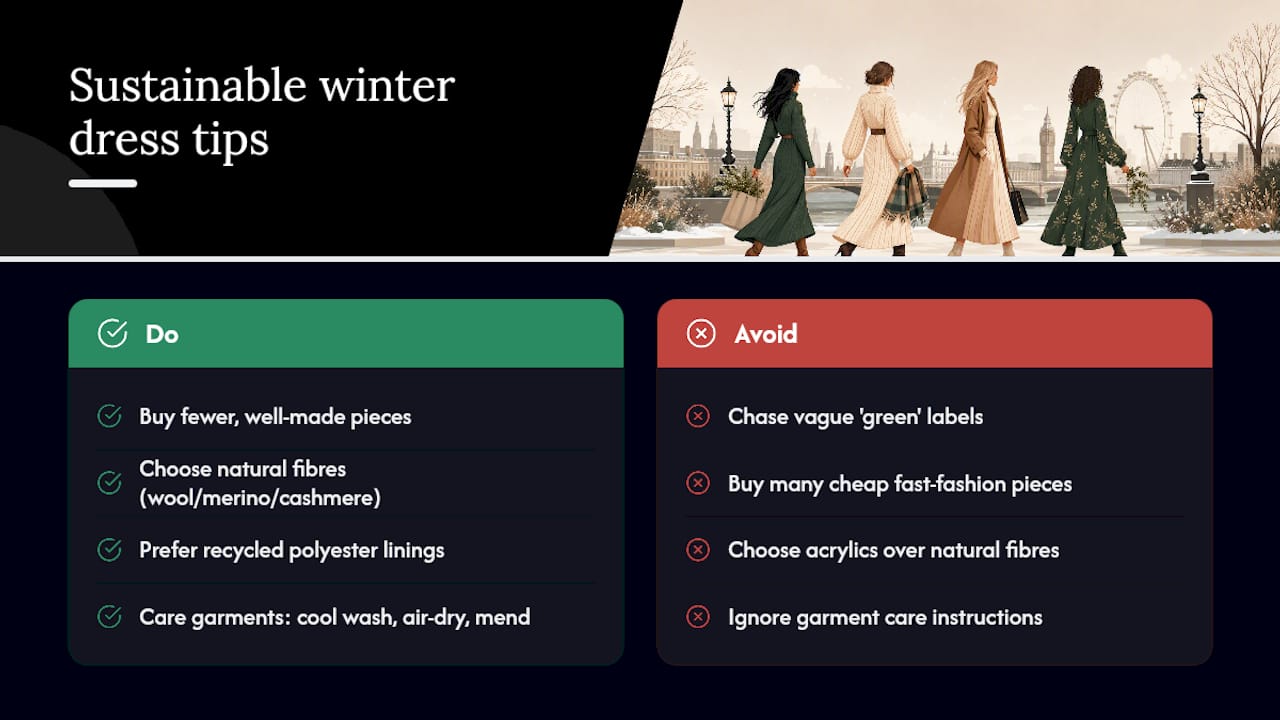
Sustainability in winter dressing starts with buying fewer pieces that last several seasons, not chasing a “green” label on a dress you’ll wear twice. A well-made wool-blend sweaterdress, cared for properly, easily outlasts three fast-fashion equivalents, which is the single biggest sustainability lever available to most shoppers.
Look for natural fibres. Wool, merino, and cashmere blends biodegrade far more readily than synthetic acrylics, and they tend to hold shape and warmth for longer, which reduces how often you replace them. Recycled polyester linings are increasingly common in mid-range dresses and cut down on virgin plastic use without sacrificing the thermal retention a lining provides.
Buying secondhand or vintage for statement pieces, particularly velvet party dresses that see occasional wear, is one of the most effective ways to reduce demand for new manufacturing. A vintage velvet midi often has better construction than a new fast-fashion equivalent at the same price point, simply because standards for lining and seam finishing were higher when it was made.
Care extends a garment’s working life more than any purchasing decision, so washing wool on a cool cycle, air drying, and mending small snags promptly all count as genuine sustainable practice. Brands that offer detailed fabric composition and washing guidance, rather than a vague “dry clean only”, make it easier to keep a dress in rotation for years rather than one winter. Buying one excellent wool sweaterdress you’ll wear weekly does more for your footprint than buying five cheap ones you’ll wear rarely.
Where can you find affordable winter dress brands?
Affordable doesn’t have to mean flimsy. The trick is knowing where a budget dress can cut corners safely and where it can’t.
A cheaper dress can save on trims, buttons, and decorative stitching without any real loss in how it performs day to day. It cannot skip a proper lining in a velvet or wool dress, because that’s where warmth and drape actually come from. If a budget dress is unlined and thin, it will look and feel cheap within a month regardless of the price tag.
Mid-range online retailers regularly run seasonal sales and multi-item discounts that bring knit and lined dresses down to a genuinely affordable price without dropping fabric quality. Buying two or three dresses in one order to hit a discount threshold is a straightforward way to build a small winter capsule for less than buying pieces individually across different months.
Department store ranges are also worth checking for wool-blend midis and lined velvet dresses, since large stock listings show these styles are widely available across price points, not just at the premium end. Comparing two or three retailers on fabric composition before buying, rather than on price alone, usually reveals which “budget” dress is actually the better investment.
If you’re building out a wider wardrobe rather than buying a single dress, pairing lower-cost basics with one or two affordable staple pieces stretches a winter clothing budget further than spending everything on one expensive item.
How do you care for winter dresses to keep them warm and looking good?
Wool and wool-blend dresses lose their shape fastest when they’re hung wet, so always dry them flat on a towel, reshaping gently while damp. Hanging a heavy wet knit stretches the shoulders and the hem within a single wash.
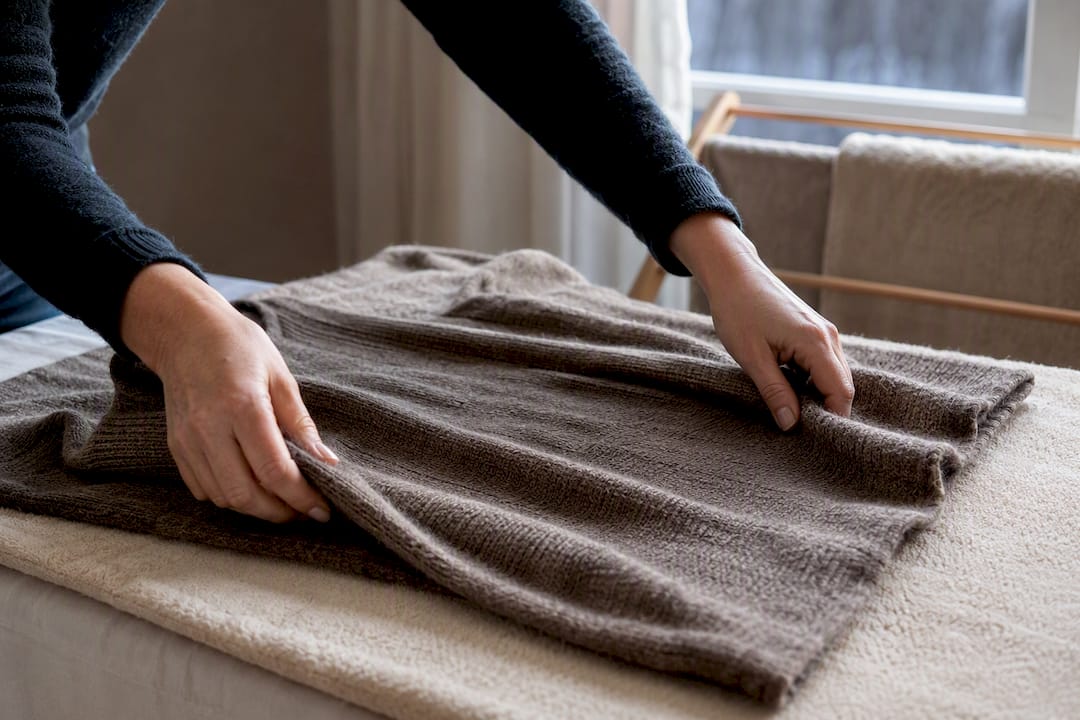
Wash on a wool or delicate cycle at a low temperature, and turn the dress inside out first to protect any surface texture or embellishment. Velvet dresses generally need dry cleaning rather than a home wash, since water can crush the pile permanently and there’s no home fix for that once it’s happened.
Store knitwear folded rather than on a hanger. A hanger creates shoulder bumps in wool over a season, while folding on a shelf keeps the shape intact. Cedar blocks or lavender sachets in storage discourage moths, which target wool and cashmere specifically over synthetic fabrics.
Address pilling early with a fabric shaver rather than waiting until the whole surface looks worn, and check hems and linings every few wears for loose threads before they turn into a bigger repair. A dress that’s cared for properly through one winter will look genuinely close to new by the second, and that’s really the whole economic case for buying better fabric in the first place.
Shop the winter dresses we’d actually recommend
If you’ve read this far, you already know the shapes to look for: a sweaterdress, a belted midi, a sleeved maxi, something with a proper lining. A collection built around exactly that brief ensures you’re not hunting across ten different shops to find one dress that actually fits the checklist above.

The Belted Midi Dress with Wide Sleeves covers the long-sleeve midi category directly, with a defined waist that works equally well under a tailored coat or dressed up with heeled boots for evening. For something with a softer, more relaxed feel, the Floral Midi Sundress with Lace-Up Detail layers well over a thermal base and takes a cardigan easily on milder winter days. Pair either with a cardigan for extra warmth without bulk, and finish the look with the Top Handle Bag with Bamboo Detail for a structured, cold-weather-appropriate finish.
Orders may include promotions like free UK shipping and a return window to support customer satisfaction. Browse the full JV London collection and build your winter edit around pieces that are genuinely warm, not just seasonal in name.
A closing thought on dressing for winter
The rule I’d give any friend: never let a coat do all the work a dress should be doing underneath it. Favour proportion over volume, and let one textured piece, a velvet sleeve, a chunky knit hem, carry the outfit while everything else stays quiet. For the staples that make that easy, JV London’s dress edit and its wedding guest styling guide are worth a look before the season gets away from you.
— Mykola
Sources
- Winter capsule wardrobe ideas — Editorialist
- 30 Best Winter Dresses for the Season Ahead — Glamour
- The best winter dresses I’m coveting this season — Marie Claire UK
- The best tights for cold weather — Stems Luxury
FAQ
What are the best dresses for women to wear in winter?
A sweaterdress, a long-sleeve midi, a lined velvet dress, and a turtleneck dress cover most winter needs between them, with the sweaterdress being the single most versatile piece to buy first.
What are the trendy winter dress ideas for 2026?
Jewel-toned velvet, textured knits, and belted midi silhouettes remain the strongest picks this season, with editors favouring pieces that pair a neutral base with one statement texture rather than head-to-toe pattern.
What are good winter dress styles for women over 60?
Turtleneck and high-neck midi dresses in soft wool blends give warmth and coverage without feeling stiff, and a belted style like JV London’s wide-sleeve midi offers definition without a tight fit.
What are the best fabrics for warm winter dresses?
Merino wool and wool blends give the best warmth without bulk, boiled wool and cashmere blends add extra insulation for a premium, and a full lining improves both warmth retention and drape in velvet or wool dresses.
How do you style a winter dress for the office?
A long-sleeve midi in ponte or heavier jersey works with ankle boots, opaque tights at 80 denier or above, and a tailored coat, giving a smart silhouette that still holds warmth through a full working day.