The safest bet for comfortable heels for weddings is a block heel or platform wedge sitting below a podiatrist-recommended height, ideally moderately low, with a cushioned footbed and an adjustable strap. That height range, backed by podiatrist guidance, keeps forefoot pressure manageable without sacrificing the lift a wedding outfit needs. Below, you’ll find a shortlist by role and venue, the exact features to check before buying, and a pre-wedding routine that stops new shoes ruining a good day.
TL;DR:
- Shoes with a heel height under 7cm, ideally around 6cm, significantly reduce forefoot pressure for all-day comfort during weddings.
- Block heels and platform wedges distribute weight more evenly and are more stable on uneven ground or when dancing than stilettos.
- Features like adjustable straps, cushioned footbeds, wider toe boxes, and textured soles are critical to maintaining comfort across long hours.
- Properly breaking in shoes weeks before the event prevents blisters and ensures the shoes mold to your feet, reducing the risk of discomfort.
- Selecting shoes with stable bases and supportive design elements increases confidence and comfort, especially on outdoor or soft surfaces.
Table of Contents
- What are the most comfortable heels for weddings?
- What comfort features actually matter when buying wedding heels?
- Which heel silhouette should you actually pick?
- What do podiatrists and shoe testers actually recommend?
- How do you break in wedding heels without wrecking your feet?
- How do you stay comfortable once the day arrives?
- What Jvwear’s shoe range gets right about wedding comfort
- Shop comfortable wedding heels that match this guide
- Sources
- FAQ
What are the most comfortable heels for weddings?
The honest answer depends on where you’re standing, sitting, and dancing, but a few silhouettes come up again and again in testing and podiatrist advice. Here’s the quick shortlist, sorted by who’s wearing them and what the venue throws at you.
For the bride: a platform wedge or a low block heel with a proper cushioned footbed is the standard recommendation. Platforms reduce the pitch of your foot, which lets you wear a higher heel with noticeably less strain on the ball of your foot than an equivalent stiletto would demand. When you’re browsing, check the product description for a removable or contoured insole. That single detail tells you more about all-day comfort than the fabric or the price point.
For bridesmaids and guests: a mid-height block heel, a strappy mid-heel, a kitten heel, or a slingback all do the job without wrecking your feet by the speeches. These styles spread your weight more evenly across the sole, which matters when you’re on your feet from the ceremony through to the last dance. Look for a secure strap fastening and some give in the footbed material.
For outdoor ceremonies: a wedge or a wider block heel stops you sinking into grass or gravel, which a stiletto simply cannot manage on soft ground. Confidence matters here as much as comfort. Nobody wants to spend a garden reception worrying about their heel disappearing into the lawn.
For the dance floor and evening stretch: a cushioned block heel or a platform with an ankle strap holds up best once the party gets going. The strap keeps the shoe locked to your foot through fast movement, and the extra cushioning absorbs the impact that hours of standing and dancing put through your joints.
A few style notes worth keeping in mind as you shop:
- Bride, formal ceremony: platform wedge with a cushioned footbed, check for a removable insole.
- Bridesmaid or guest, all-day event: mid-height block heel or slingback, check the strap fastening and toe box width.
- Outdoor or marquee wedding: wedge or wide block heel, check the sole material for grip on grass.
- Reception and dancing: cushioned block or platform with ankle strap, check the heel base width for stability.
None of these choices require sacrificing how you look for how you feel. The trade-off between style and comfort is far smaller than it used to be, largely because more brands now build cushioning and arch support into styles that still photograph beautifully.
What comfort features actually matter when buying wedding heels?
Heel height is the first filter, and it’s a stricter one than most people expect. A podiatrist quoted by Who What Wear recommends staying under 7cm, with around 6cm offering the best balance between elegance and reduced forefoot load. Every centimetre above that shifts more of your body weight onto the ball of your foot, and over an eight-hour wedding day, that adds up fast.
Statistic to remember: Podiatrists recommend keeping wedding heels under 7cm, with 6cm cited as the sweet spot for comfort without sacrificing height.
Beyond height, the features that separate a shoe you can wear all day from one you’ll be removing by 6pm come down to construction, not branding. Editorial testers who assessed more than 50 pairs of bridal shoes found that biomechanically designed footbeds, genuine arch support, and targeted cushioning mattered far more to comfort than material quality or price. A £40 pair with a decent footbed will often outperform a £200 pair with none.
Here’s what to check before you commit to a purchase:
- Heel shape: block or sculpted heels distribute weight across a wider base, which is why podiatrists and stylists favour them over stilettos for anything longer than a quick photo session.
- Strap adjustability: feet swell over a long day, so a strap with some flex or an extra hole gives you room to loosen it later without the shoe falling off.
- Footbed cushioning: look for phrases like “removable insole”, “contoured footbed”, or “cushioned sole” in the product description.
- Toe box width: brands known for comfort tend to build in wider toe boxes and multiple width options, which prevents the pinching that causes most mid-event pain.
- Sole traction: a slightly textured or rubberised sole grips better on tile, cobbles, and dance floors than a smooth leather sole.
- Returns policy: a shoe that feels fine standing in your hallway can feel very different after four hours. A straightforward exchange window matters more than most shoppers realise until they need it.
Which heel silhouette should you actually pick?
Every heel shape makes a different trade between height, stability, and how your foot feels by the end of the night. Matching the silhouette to your venue and how long you’ll be standing does more for comfort than any single product feature.
-
Block heels distribute your body weight over a wider surface area than a narrow heel can, which is precisely why they hold up so well on grass, gravel, and packed dance floors, making them a popular choice for those seeking compression and supportive sock benefits for all‑day standing. They’re the closest thing to a universal safe choice for weddings, whatever your role on the day.
-
Platform wedges reduce the angle between your foot and the ground, letting you wear real height without the same forefoot pressure a stiletto of equal height would cause. This makes them a strong pick for brides who want the visual lift of a heel without gambling on comfort during a ceremony that might run long.
-
Kitten heels sit low, typically 4 to 5cm, and suit guests who want a polished, elegant line without much strain at all. They’re not dramatic, but they’re dependable, and dependable is exactly what you want when you’re standing through a two-hour service before the reception even starts.
-
Stilettos still have a place, but reserve them for shorter wear windows. Ceremony photos, a seated dinner, or a quick entrance rather than a full day on your feet. If you’re set on a stiletto, choose one with a slightly wider heel base or a platform front to add a bit of stability back into the equation.
-
Slingbacks and ankle-strap heels improve on a plain pump because the adjustable fastening gives you room to loosen the fit as your feet swell, something designers and testers consistently flag as one of the most functional features in a shoe built for long events. An ankle strap also does a quieter job of keeping your foot locked in place during dancing, which matters more than it sounds.
Pro Tip: If you’re torn between two heel heights, buy the lower one. You can always add a bit of drama with a statement bag or a bold lip, but there’s no accessory that fixes sore feet at 9pm.
What do podiatrists and shoe testers actually recommend?
The consensus among podiatrists and footwear testers is narrower than the marketing around wedding shoes suggests. Nobody credible recommends breaking in a shoe that hurts on day one, and nobody recommends choosing height over structure.
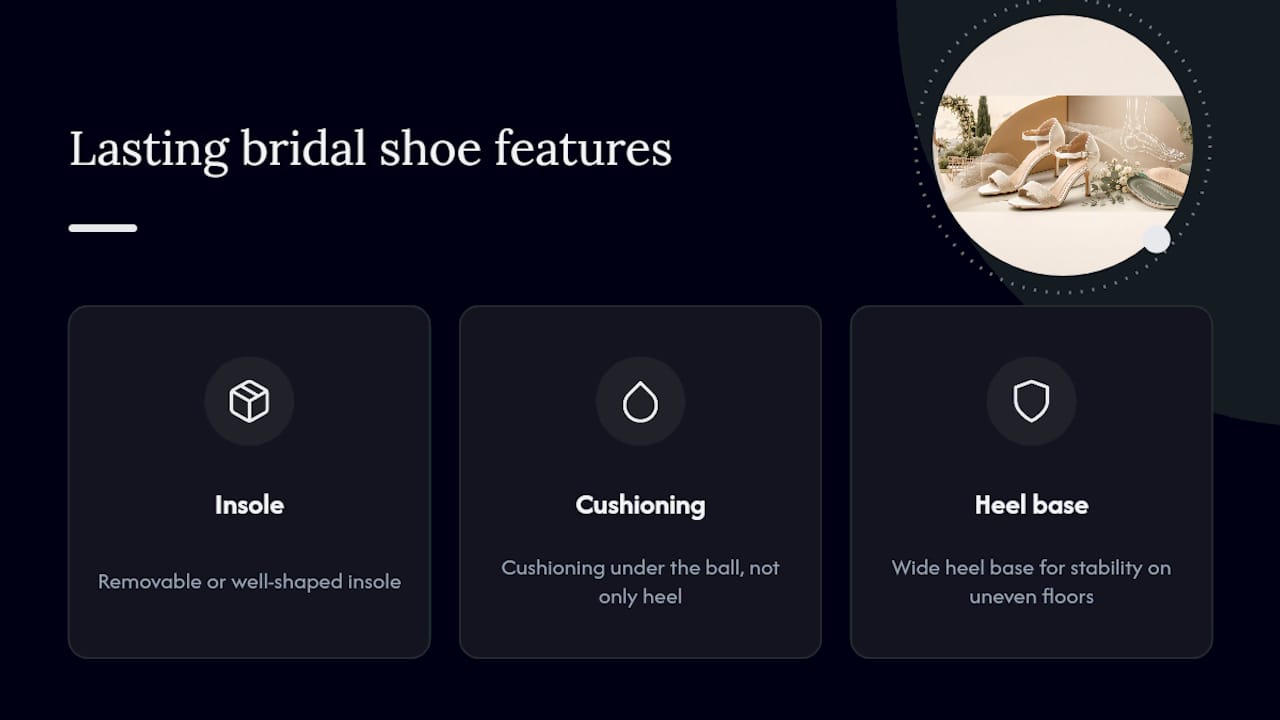
That’s a useful filter when you’re shopping, because it cuts through a lot of noise. A shoe that pinches in the shop will pinch at the altar. Editorial testers who worked through dozens of bridal shoe pairs reached a similar conclusion from a different angle: the pairs that held up over a full night shared three traits, a removable or well-shaped insole, cushioning placed under the ball of the foot rather than just the heel, and a heel base wide enough to feel stable on uneven flooring.
When you’re reading product reviews, weight the comments that mention specific hours worn (“wore these for eight hours at a wedding, no complaints”) far more heavily than generic five-star praise. A review that says “gorgeous shoes” tells you nothing about comfort. One that says “stood in these through a three-hour ceremony and a full reception” tells you almost everything.
How do you break in wedding heels without wrecking your feet?
New shoes need a proper introduction to your feet, and that starts weeks before the wedding, not the night before. Leather in particular needs time to soften and mould to your foot shape, and rushing that process is how blisters happen on the day itself.
- Wear them indoors first, in short 20 to 30 minute sessions around the house, ideally with socks on to help stretch tight leather without abrasion.
- Increase wear time gradually over one to two weeks, watching for any spot that rubs consistently rather than settling.
- Take stubborn shoes to a cobbler if a specific pressure point won’t ease up. A cobbler can stretch tight leather across the toe box or add padding to the heel cap far more effectively than any amount of home stretching.
- Do a final fit check about a week before the wedding, wearing the exact hosiery or socks you’ll have on the day, since even sheer tights change how a shoe sits.
- Pack a small kit the night before: blister plasters, a couple of non-slip pads, a travel shoe bag, and a backup pair of flats such as flat sandals with crossed ankle straps for the later hours.
If a pair still feels wrong after two weeks of gradual wear, that’s a signal worth listening to rather than pushing through.
How do you stay comfortable once the day arrives?
Small adjustments through the day do more for comfort than anything you could have done in advance. Feet swell gradually from morning to evening, so a strap that felt snug at 10am might need loosening by 4pm, and re-fastening securely afterwards keeps the shoe from sliding.
- Loosen and re-fasten adjustable straps once you notice any tightness, rather than waiting until it becomes painful.
- Place a gel cushion or blister plaster over known pressure points before they start rubbing, not after.
- Scuff the sole lightly on rough ground or add a non-slip pad if the floor is polished tile or timber, a trick destination wedding guests swear by for slippery venues.
- Swap discreetly into flats once the dancing starts. Nobody at a wedding is checking your footwear by 10pm.
- On grass or cobbles, consider clear heel protectors, since even a sturdy block heel can catch in soft ground.
What Jvwear’s shoe range gets right about wedding comfort
Working across a fashion catalogue where shoes sit alongside dresses and occasionwear, the pattern is obvious: customers ask about comfort before they ask about colour. Wedding guests, in particular, want a heel that photographs well in the morning and still feels wearable by last dance.
The approach to shoes in this range leans into that brief directly, prioritising block heels, platform soles, and adjustable straps over unstable stiletto shapes. One recurring theme in customer messages is relief at finding a heel with an ankle strap that holds through a full evening, rather than one that needs constant adjustment. That small mechanical detail, more than colour or trend, tends to decide whether a shoe gets worn twice or left in the wardrobe.
— Mykola
Shop comfortable wedding heels that match this guide
Every recommendation in this guide points towards a handful of practical features: a manageable heel height, real cushioning, and straps that adjust. Jvwear’s shoe range was built around exactly that brief, so here’s where to start looking.
The Helka platform wedge sandals reduce forefoot pitch the way this guide recommends, making them a strong pick for brides or guests wanting height without the stiletto trade-off. The Sylva zebra-print heels with ankle strap demonstrate the adjustable fastening podiatrists flag as useful for swelling feet. For outdoor or marquee weddings, the Zelaya wedge sandals with cross strap design give you the stability a lawn ceremony demands. And if you want a genuine backup pair for the dance floor, the Rowena flat sandals with crossed ankle straps tuck easily into a bag for later.
Orders ship free within the UK, and returns are accepted within 30 days if a fit isn’t quite right once you’ve tried the shoes at home. Browse the current wedge sandal styles now, and if you’re still finalising the outfit around them, the Solvra two-piece midi dress set pairs neatly with a low block heel for a guest look that holds up from ceremony to last dance.
Sources
- I’m a Podiatrist—These Are the Wedding Guest Shoes I Actually Recommend
- We tested 50+ pairs of bridal shoes to find the ones comfortable enough to wear all night
- Comfortable reception shoes (The Knot)
FAQ
What are the comfiest heels for a wedding?
A block heel or platform wedge under 7cm, ideally around 6cm, with a cushioned footbed and adjustable strap gives you the best odds of comfort through a full wedding day.
Are there any heels that are actually comfortable?
Yes, provided you prioritise construction over height. Look for removable insoles, wide toe boxes, and a stable block or sculpted heel rather than a narrow stiletto.
What are the most comfortable heels for wearing all day long?
Block heels and low platform wedges consistently outperform stilettos for all-day wear because they spread your weight more evenly and keep forefoot pressure lower.
What are the most comfortable shoes to wear to a wedding?
For most guests, a mid-height block heel or a slingback with an adjustable ankle strap, such as Jvwear’s Sylva heels, balances style with the comfort needed for a long event.