The safest, most flexible interview outfit is a well-fitting blazer with tailored trousers or a knee-length dress in a neutral colour. Adjust the formula up or down depending on the company’s culture: more structure for corporate finance, softer separates for a startup. For virtual interviews, dress the same as you would in person, shoes included, because the outfit does more than look right. It changes how you sit, speak, and think. Quick outfit formulas for every format follow below.
TL;DR:
- Solid mid-tone colours like navy or charcoal are best for video interviews to prevent shimmer or blurring on camera.
- In most industries, a tailored blazer and trousers or a knee-length dress are versatile, professional options suitable for many levels of formality.
- Tech and startup roles favor smart separates and casual footwear over full suits, while creative sectors allow bold accessories for personality.
- A six-piece capsule wardrobe including a blazer, dress, trousers, blouse, cardigan, and neutral shoes offers enough variety for most interview settings.
- Always test full outfits and virtual setup the night before to avoid surprises and ensure comfort, proper framing, and adequate lighting.
Table of Contents
- Interview outfit women should wear at each formality level
- Video interview outfit advice: what actually reads well on camera
- Industry-specific interview outfit ideas for women
- Build a small capsule interview wardrobe
- Pre-interview checklist: test everything before the day
- What styling experts actually say about interview dressing
- Grooming and accessories: keep the focus on you, not your look
- Choosing interview footwear that works as hard as you do
- Adjusting your interview outfit for cultural and regional norms
- Layering your interview outfit for the weather on the day
- Style that still feels like you
- The JV London edit: shopping the capsule pieces
- Sources
- FAQ
Interview outfit women should wear at each formality level
Formality is really a spectrum, not three fixed uniforms, and the trick is reading which end of it your interviewer sits on. Business formal suits corporate law, finance, banking, and traditional consulting. Business casual fits most office roles, from marketing to operations. Smart casual works for startups, creative agencies, and increasingly for tech.
- Business formal: matching blazer and trousers or a pencil skirt, silk or cotton blouse, closed-toe pumps, minimal jewellery.
- Business casual: a tailored blazer over a knee-length dress or smart top with trousers, loafers or block heels, a structured bag.
- Smart casual: smart separates such as neat trousers and a blouse, or a midi dress with a cardigan, clean trainers or flats if the office is relaxed.
Stick to neutrals such as navy, charcoal, cream, and black, since a neutral palette projects calm competence across nearly every setting. Save bold prints and bright colour for after you have got the job. Fabric matters more than most people realise: a crisp cotton blouse photographs and moves better than a clingy jersey top, and structured wool or ponte holds its shape through a long day of meetings.
Video interview outfit advice: what actually reads well on camera
Solid, mid-tone colours read better on webcams than busy prints or fine stripes, which can shimmer or blur through compression. This isn’t a lesser version of dressing up. Fortune’s reporting on virtual interview standards makes the case for treating a video call with the same seriousness as walking into an office, full outfit and shoes included, not just a smart top over pyjama bottoms.
That last point is not vanity advice. Putting on real shoes signals to your brain that this is a professional moment, not another Tuesday on the sofa, and it shows in your posture and voice.
- Choose a rounded or V-neckline that sits comfortably and doesn’t gape when you lean forward.
- Check your background for clutter or clashing colour before the call starts.
- Sit facing a window or lamp so light falls on your face, not behind you.
- Skip dangly earrings or anything that catches the light and distracts on screen.
Pro Tip: Do a two-minute test call with a friend the day before. Watch the recording back muted. You’ll spot glare, gaping necklines, and colour problems your naked eye misses on a live call.
Industry-specific interview outfit ideas for women
Different sectors expect different signals, and copying the wrong one can make you look out of step even when your outfit is perfectly smart. Here are workable formulas for the industries jobseekers ask about most.
- Corporate and finance. A tailored suit in navy or charcoal, or a sheath dress under a matching blazer, paired with closed-toe court shoes and a structured bag. Keep jewellery to one statement piece at most.
- Tech and startups. Smart separates beat full suits here: dark, neat jeans or chinos with a blazer over a simple top, finished with clean trainers or loafers. The goal is polished, not corporate.
- Creative industries. Structured basics, such as tailored trousers and a crisp shirt, with one tasteful statement piece, a bold blazer, an interesting necklace, or a striking bag, to show personality without looking undone.
- Education, nonprofit, and trades. Comfort and function matter as much as polish. A smart midi dress with flats, or trousers with a cardigan and low block heels, works well when you might tour a site or classroom during the visit.
Whichever category fits, researching the company’s actual dress culture beats guessing from job title alone. A “startup” in fintech dresses very differently to one in fashion tech.
Build a small capsule interview wardrobe
A curated set of around six versatile pieces covers most interview dress codes and removes the morning-of scramble entirely. Build the capsule around pieces that mix and layer easily rather than one-off outfits.
- A tailored blazer in navy or black, the workhorse of the whole wardrobe.
- A knee-length sheath or wrap dress, wearable alone or under the blazer.
- Tailored trousers in a neutral shade that pair with almost any top.
- A crisp blouse or fine-knit top for layering under the blazer.
- A structured cardigan for smart casual days or cooler offices.
- One pair of comfortable closed-toe shoes in a versatile neutral.
Mixed correctly, those six pieces produce four to six distinct outfits: blazer with dress, blazer with trousers and blouse, dress alone with a cardigan, trousers with blouse and no jacket. When you’re building this out on a budget, prioritise fit over fabric. A £30 blazer that fits your shoulders beats a £150 one that doesn’t. When choosing a dress as your anchor piece, make sure the blouse or dress underneath looks finished on its own, in case you take the blazer off partway through.
Pre-interview checklist: test everything before the day
Confidence on the day comes from removing surprises the night before, not from the outfit itself.
- Try the full outfit on at home and sit, walk, and reach as you would in the room. Testing comfort while seated and moving catches gaping buttons or a skirt that rides up.
- Never wear something brand new and untried. Save first outings for lower-stakes days.
- Press or steam every garment, and check for pet hair, deodorant marks, or loose threads.
- Polish shoes and check heels for wear.
- Pack a small kit: safety pins, a stain wipe, spare tights, and a lint roller.
- For virtual interviews, test your camera framing and lighting the night before, not five minutes beforehand.
Indeed’s career advice on interview dressing makes the same point in different words: preparation removes the variables you can control, so nerves only have the ones you can’t left to work on.
Pro Tip: Lay the full outfit out, shoes and bag included, the night before. Seeing it assembled catches missing buttons or scuffed shoes while you still have time to fix them.
What styling experts actually say about interview dressing
The consensus among stylists and career coaches lands on three rules. Keep the outfit non-distracting, because interviewers should remember your answers, not your clothes. Research the company’s actual dress culture before assuming. Treat virtual interviews exactly as you would in-person ones, shoes and all, because dressing fully shifts your mindset before the call even starts.
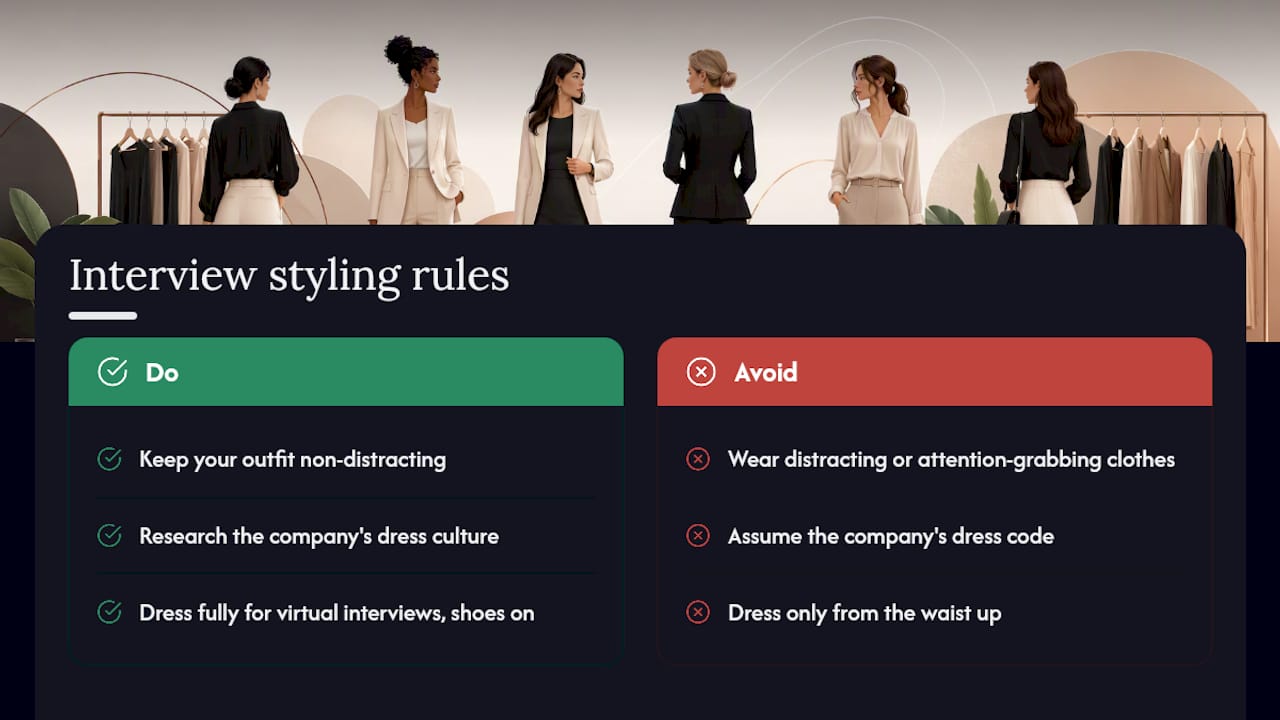
This kind of versatile blazer, midi dresses, and structured bags make assembling this capsule straightforward.
Grooming and accessories: keep the focus on you, not your look
The rule stylists repeat most often is simple: nothing on your body should compete for attention with what you’re saying. That means grooming and accessories exist to support the outfit, never to headline it.
Hair should be neat and out of your face, whether that’s a low bun, a simple blowout, or a tidy ponytail. You want to be able to forget about it once you sit down, not tuck it behind your ear every thirty seconds. Nails matter more than people expect: chipped polish or overly long acrylics draw the eye during a handshake or when you’re gesturing to make a point. A clear coat or neutral shade is the safest bet.
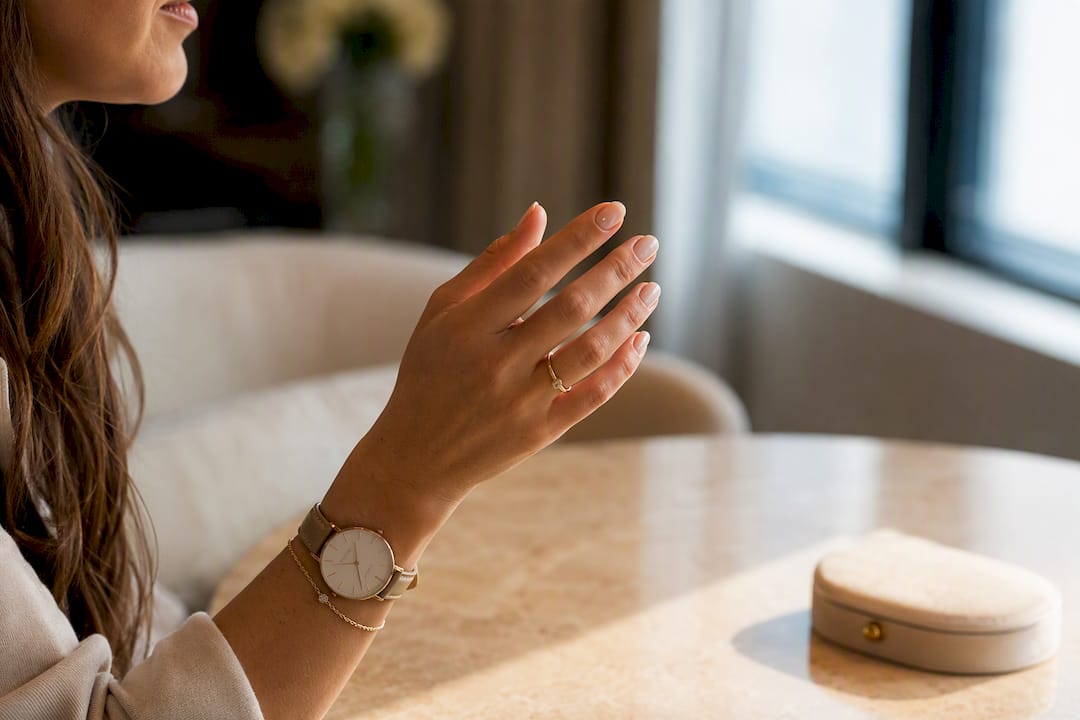
Makeup should read as polished rather than heavy. Daytime, office-appropriate makeup photographs and reads well both on camera and across a table, whereas anything with heavy shimmer or strong colour pulls focus.
On jewellery, less genuinely is more. Conservative accessories consistently outperform statement ones for interview impressions, because fit and cleanliness leave a stronger impression than anything you’re wearing on your wrists. Stick to one statement piece at most, small studs or simple hoops, a thin necklace, a watch. Skip anything that jingles, clatters against a table mic, or catches light awkwardly on camera. Perfume and cologne belong at home too. A closed room and a strong scent is a genuine distraction for an interviewer who might be sensitive to it, and there’s no upside to the risk.
Choosing interview footwear that works as hard as you do
The right interview shoe balances two things that often pull against each other: looking sharp and being able to walk into the building without wincing. Neither should lose.
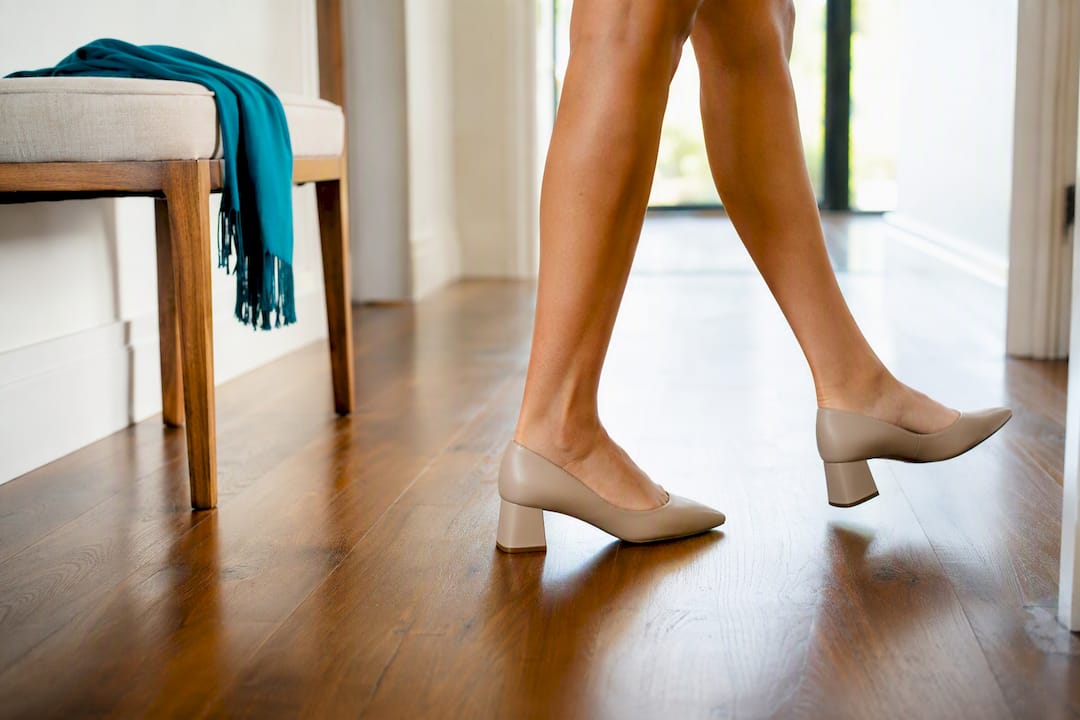
Closed-toe pumps or block heels in a neutral shade are the safest universal choice for business formal and business casual settings. Block heels specifically solve the comfort problem that stiletto heels create: you get height and polish without the wobble on cobbles, station floors, or a long walk from the car park. A heel of five centimetres or less is usually the sweet spot between looking finished and staying comfortable through a half-day of interviews.
Flats and loafers work well for smart casual and creative roles, provided they’re clean and free of visible wear. Trainers can work for tech and startup interviews specifically, but they need to be genuinely clean, not the pair you wear to the gym.
Whatever you choose, comfort testing matters as much as the style itself. Walk in the shoes around your home for at least twenty minutes before the day. Blisters and rubbing show up fast, and there’s no fixing them once you’re at the office. If you’re torn between two pairs, pick the one you can walk confidently in over the one that looks marginally sharper. A slight limp reads far worse than a slightly less dramatic heel.
Adjusting your interview outfit for cultural and regional norms
Dress expectations shift more than most guides admit, and what reads as appropriately formal in one setting can look either underdressed or overdressed in another. Company culture research matters here too, because national and regional norms often layer on top of industry norms rather than replacing them.
In the UK, business formal still leans conservative for law, finance, and government roles, with tailored suits and covered shoulders expected as standard. Creative and tech sectors in cities such as London and Manchester have loosened considerably, and turning up in a full suit to a design agency interview can occasionally read as slightly stiff rather than impressive.
If you’re interviewing with an international company, or one with a strong presence in a specific region, it’s worth checking whether that market’s norms apply. Some Gulf and Asian markets expect more coverage and formality than a UK office might, particularly around shoulders, hemlines, and necklines. Conversely, some Scandinavian and Dutch business cultures run noticeably more relaxed than their UK equivalents, even at senior level.
When genuinely unsure, err toward the more formal, conservative option. Being slightly overdressed reads as respectful effort. Being underdressed can read as not having done your homework, which undercuts the exact impression you’re trying to build.
Layering your interview outfit for the weather on the day
British weather rarely cooperates with interview scheduling, so layering needs to solve a real problem, not just add polish. The goal is arriving looking composed regardless of what happened on the commute.
For colder months, a wool or wool-blend coat in a neutral colour over your outfit works better than a puffer jacket, which can look bulky and casual once you’re inside. Carry it rather than wear it into the room, and check it doesn’t crush your blouse or blazer on the way. A lightweight scarf adds warmth without disrupting the outfit underneath, and it’s easy to remove and fold into a bag once you’re seated.
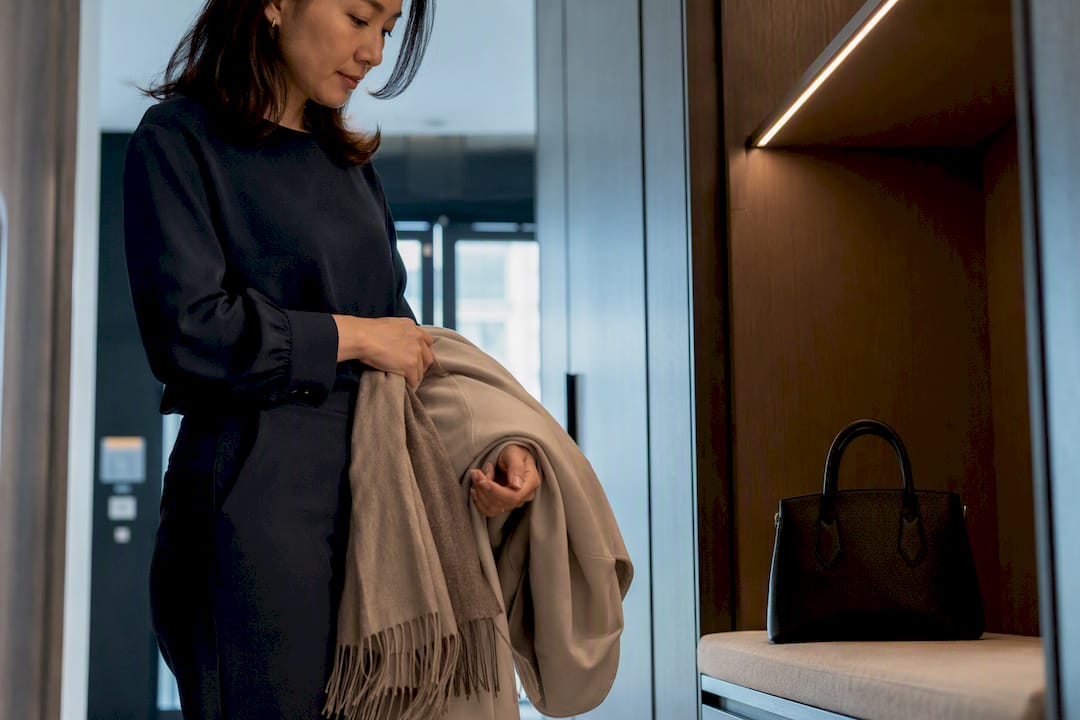
In warmer months, breathable fabrics such as cotton and lightweight wool blends prevent the flushed, overheated look that synthetic fabrics can cause under office lighting or nerves. A blazer you can remove partway through the interview, if the room turns out to be warm, works well provided the layer underneath still looks finished on its own.
Whatever the season, always carry one flexible layer, a cardigan, a light blazer, or a scarf, that can go on or come off depending on the office’s air conditioning or heating. Interview rooms are notoriously unpredictable temperature-wise, and shivering or visibly sweating both pull focus away from what you’re actually there to say.
Style that still feels like you
Professional doesn’t mean identical to everyone else in the waiting room. Let one detail, a colour, a texture, a piece of jewellery, carry your personality, and prioritise fit and comfort over trend every time. The outfit should support you, not perform for you.
— Mykola
The JV London edit: shopping the capsule pieces
Building that six-piece capsule gets easier when you’re shopping from a range designed around versatility rather than one-off trend pieces. Start with a structured cardigan as your flexible layering piece for smart casual days or unpredictable office temperatures, then look at a belted midi dress with wide sleeves as your anchor dress, sharp enough to wear alone or under a blazer.
For creative or education roles where a lighter look fits better, a floral midi sundress with lace-up detail offers coverage and polish without tipping into formal. Complete the outfit with a sculptural handbag with a knotted handle for a structured finishing touch that reads professional across most settings.
Every order ships free across the UK, and if a fit isn’t quite right, returns are accepted within 30 days, so building your capsule doesn’t mean gambling on sizing alone. Start with the work capsule wardrobe guide if you want the fuller 18-piece version, then shop the anchor pieces directly from the collections above.
Sources
For deeper reading, Forbes’ guide to interview dressing covers styling fundamentals, Fortune’s reporting on dress-code research explains why formality varies so widely by company, and Indeed’s practical checklist covers the preparation steps worth running through the night before.
- What to Wear to an Interview (Forbes Personal Shopper)
- The suit rule is dead. Researching your interviewer isn’t | Fortune
- How to dress for a job interview | Indeed
FAQ
What is the safest interview outfit for women?
A tailored blazer with trousers or a knee-length dress in a neutral colour such as navy, charcoal, or cream works across most industries and formality levels.
What should women wear for a video interview?
Wear a full outfit, including shoes, in solid mid-tone colours that read clearly on camera, and avoid busy patterns or reflective jewellery near your face.
Is it ever okay to skip the blazer?
Yes, for smart casual settings such as startups or creative agencies, a polished top or midi dress with a cardigan often reads better than a full suit.
How many outfits do I need for interview season?
A six-piece capsule, blazer, dress, trousers, blouse, cardigan, and one pair of neutral shoes, mixes into four to six distinct outfits without needing new purchases each time.
What colours should I avoid for an interview?
Avoid loud prints, neon shades, or anything with fine stripes on camera, since these can distract the interviewer or blur through video compression.